The feed doesn’t have to be fun to win. Sometimes it only has to be a way out of the assignment you’re avoiding.
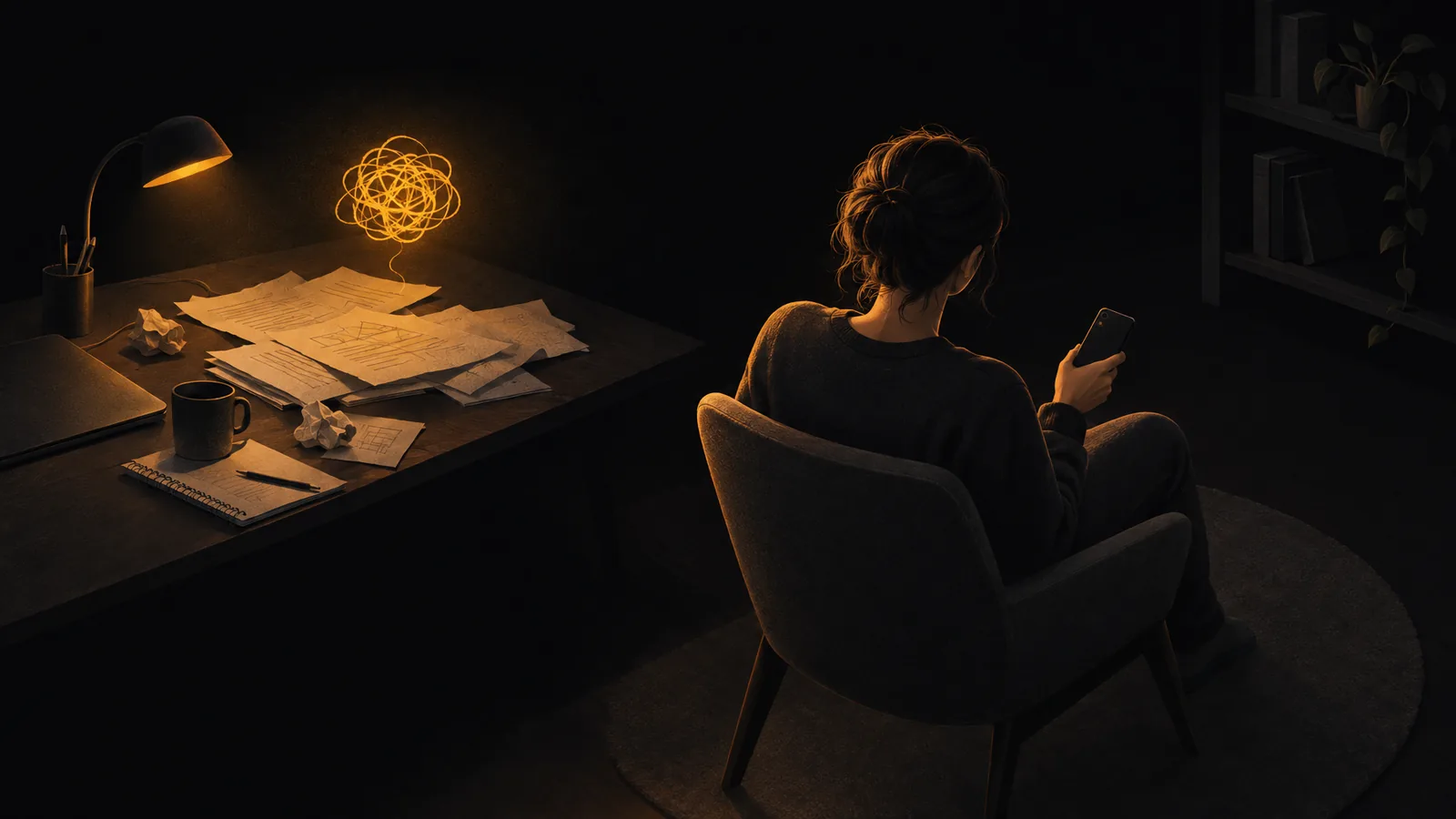
A distraction can offer distance from a task without offering much pleasure.
If that sounds like your chronic procrastination, here’s a finding that fits. In Piers Steel’s 2007 meta-analysis, procrastination had a strong, consistent link with task aversiveness: how unpleasant the task feels. Sensation seeking, the appetite for something exciting, had only a weak one.
Procrastination in general is also remarkably common. In a spring 2025 survey of 65,950 students at 97 US colleges, procrastination was the most common issue students reported, tied with stress: 72.3% said it affected them. And 45.4% of all the students surveyed said it had hurt their academic performance.
Why the Escape Feels So Good
Steel’s list of strong links doesn’t stop at unpleasant tasks. It also includes how far away the payoff is, how much you doubt you can do it, impulsiveness, and distractibility.
Now picture a dreaded essay due in three weeks, with your phone face up beside it. That one desk covers most of the list.
Researchers Fuschia Sirois and Timothy Pychyl argue that procrastination has a lot to do with short-term mood repair, especially when a task feels unpleasant: putting it off brings relief now, and the cost lands on your future self. Seen that way, the feed doesn’t need to be fun to win. It may only need to feel easier than the essay.
So look at the task, not just the feed, and change two things before you start: how big the task looks, and how close the escape is.
Make the Start Smaller, Then Add a Barrier
Swap “finish the essay” for “open it and read the first question.” That’s the whole commitment. Once it’s open, decide what comes next.
Before you open it, block the one or two apps you keep escaping to, just for this attempt. On iPhone, BlockMyApps can block the apps you pick, so you decide once instead of arguing with the feed every few minutes.
What a Two-Week Phone Block Showed
In a 2025 experiment with 467 participants, an app blocked all internet on their phones, Wi-Fi included, for two weeks. Calls and texts still worked, and so did the internet on a computer. The researchers reported better sustained attention, measured with a test, along with improvements in mental health and well-being.
The catch: only 119 of the 467 kept the block on for at least 10 of the 14 days. The study also measured attention and well-being, not procrastination, and it cut off all mobile internet rather than a few apps.
So it doesn’t show that blocking cures procrastination. It does suggest that a phone barrier can change how people focus and feel, and that an all-or-nothing block is hard to keep. That’s why the block above stays narrow: one or two apps, one attempt.
If the delays keep costing you grades, work, or your well-being, talk to a professional. A 2018 review of 12 randomized trials found that psychological treatments reduced people’s self-reported procrastination modestly on average, compared with no active treatment.
And next time you catch yourself scrolling something you don’t even like, skip the question of what’s so great about the feed. Ask what you’re escaping, then make the first step of it smaller.